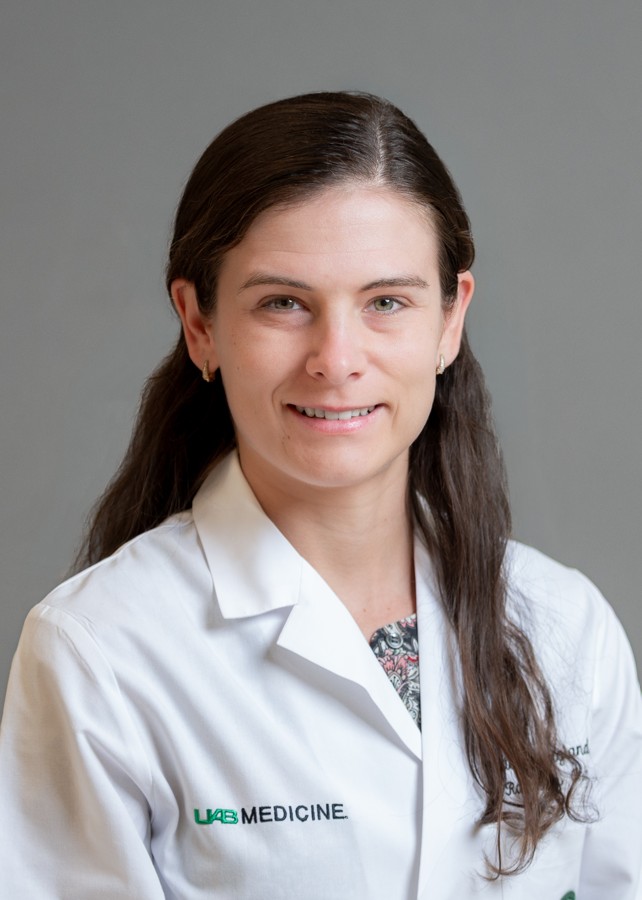
Katelyn Ragland, M.D., joined the UAB Department of Radiation Oncology as an assistant professor in August 2026. She studied bioengineering at Clemson University and attended medical school at the University of Arkansas for Medical Sciences. She completed radiation oncology residency training at UAB, where she developed a particular interest in gynecologic cancers and brachytherapy. During residency, she was involved in medical education, including teaching trainees across multiple specialties and conducting research to improve radiation treatment techniques and outcomes.
Ragland shares more about her background and goals for this new role.
What inspired you to pursue a career in this field?
Ragland: I was drawn to radiation oncology because it combines technology and problem-solving with the opportunity to build meaningful relationships with patients. My background in bioengineering initially attracted me to the technical side of the field, and the patient relationships are what made it feel like the right career for me.
What is your primary area of expertise within your field, and what sparked your passion for it?
Ragland: My primary clinical interest is gynecologic radiation oncology, particularly brachytherapy. I value the opportunity to care for women through some of the most challenging moments of their lives and to bring both technical expertise and a personal perspective to that care. I was fortunate to have mentors and research opportunities during training that helped strengthen this interest.
What aspects of your new role here are you most excited about?
Ragland: I am most excited to continue caring for patients and growing professionally within the UAB community where I trained. I am especially looking forward to exploring opportunities to expand our brachytherapy practice at UAB, while contributing to research and education.
What are your goals for making an impact through both your teaching and patient care in this role?
Ragland: In patient care, my goal is to provide thoughtful, evidence-based treatment while making a complex and often overwhelming process easier for patients to understand. I also hope to expand the ways we use brachytherapy at UAB and bring this highly targeted treatment approach to patients who may benefit. As an educator, I hope to make radiation oncology more approachable to trainees and help them understand how radiation fits into multidisciplinary cancer care.