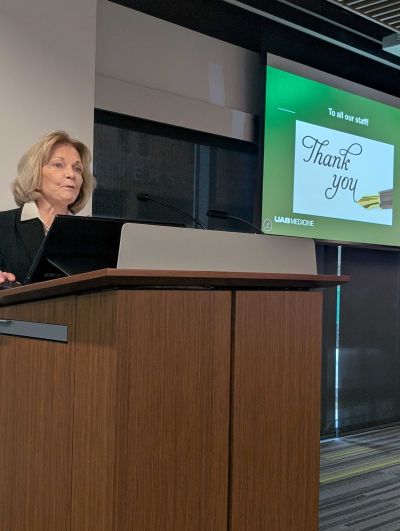
 Adrienne C. Lahti, M.D., professor and chair, Heman E. Drummond Endowed Chair in the UAB Department of Psychiatry and Behavioral Neurobiology, presented the 2026 State of the Department on Tuesday, Feb. 10, highlighting the department’s clinical, research, and educational mission areas. Watch the recording here.
These mission areas, Lahti said, are fueled by Alabama’s current mental health challenges, including being ranked No. 49 in the country for mental health services overall based on 17 measures.
“This is a pretty comprehensive measure, and we are at the end,” Lahti said. “So, this is a pretty clear picture of what we are looking at here.”
In the clinical space, Lahti highlighted the expansion of the department’s providers, including not only psychiatrists but also clinical psychologists, licensed clinical social workers, and advanced practice providers (APPs). The department has recently added nine psychiatrists, 11 clinical psychologists, and 10 APPs, many of whom conducted their training at UAB.
In addition, Lahti highlighted several of the department’s specialized clinical offerings, such as the PRIT Clinic, Maternal Mental Health Program, Early Interventions in Mental Health Program, Integrated Behavioral Medicine Service, Interventional Psychiatry Program for Treatment-Resistant Depression, Community Psychiatry Program, and more.
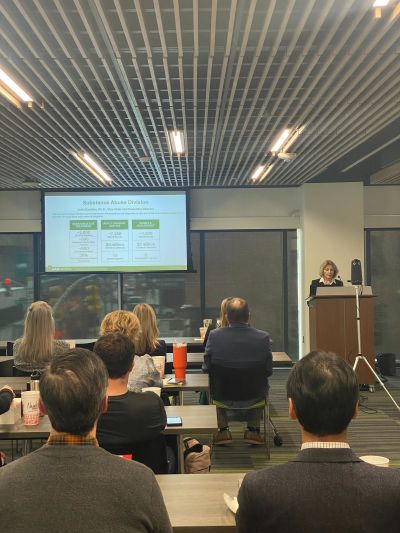 Clinical highlights also included the department recording 69,722 ambulatory visits in FY25 and boasting a strong inpatient consult component through the Consult-Liaison Division, which logged 579.3 consults per month in 2025.
In research, Lahti noted that one-third of the faculty are researchers, positioning the Department of Psychiatry and Behavioral Neurobiology as a research-driven department focused on answering critical questions in mental health and translational neurobiology. Moreover, the department has added 10 new researchers to its faculty since the year 2020.
Research areas in the department are diverse, including addiction, women’s mental health, functional neurological disorders, sleep and circadian regulation, and more, with new insights fueling improved diagnostics, therapies, and long-term patient care strategies.
In terms of the department’s educational mission, Lahti highlighted the residency program, which currently trains 36 residents (five in the research track). Notable residency stats include 528 residency applications received in FY25-26, with 40 percent of residents from Alabama and 66 percent staying in Alabama post-graduation.
The Department of Psychiatry and Behavioral Neurobiology also offers three clinical fellowships: Child and Adolescent, Consult-Liaison, and Geriatric, with seven fellows currently enrolled across the fellowship specialties.
Looking ahead, Lahti said the department will prioritize the expansion of telehealth, embracing early intervention in mental health, increasing clinical trial offerings, and the continued recruitment and training of mental health professionals across the state.
“We know that many psychiatrists will retire in the next five to 10 years,” she said. “This has been published; there are several papers describing that. So, we’ll need to continue to recruit and diversify a mental health professional force.”
Ultimately, Lahti credited the department’s faculty’s staff, trainees, and leadership partners as the driving force behind its successes.
“It’s because of you,” Lahti said, addressing the crowd. “I’m really grateful to have an incredible team of people working to support this department, and it has been a really fantastic team approach.”