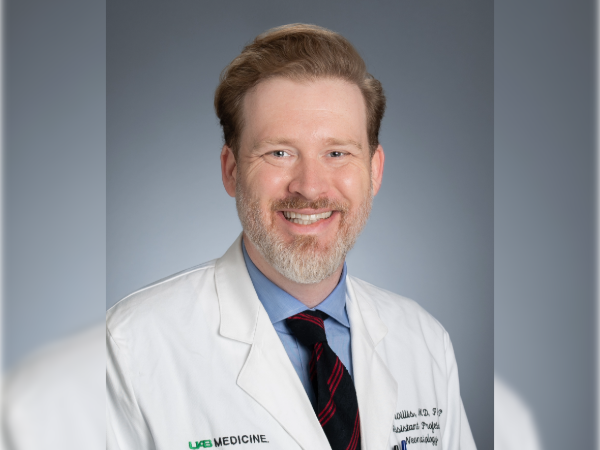
 The University of Alabama at Birmingham (UAB) Department of Pediatrics is proud to announce that Kent Willis, M.D., assistant professor in the Division of Neonatology has received a National Institutes of Health (NIH) R03 Small Research Grant from the National Heart, Lung, and Blood Institute to study how immune responses early in life may contribute to chronic lung disease later in adulthood. The award provides $222,750 in funding through May 2028.
Willis’ laboratory focuses on early-life immunology, particularly bronchopulmonary dysplasia (BPD), a serious lung disease that affects premature infants. His research will examine how changes in immune cells during infancy may contribute to the development of chronic obstructive pulmonary disease (COPD), later in life.
The project builds on Willis’ previous NIH-funded research, which identified changes in group 2 innate lymphoid cells, or ILC2s, that may influence long-term immune responses in the lungs. His team will investigate how these cells develop trained immunity and whether overly active ILC2s contribute to COPD in individuals who survived severe BPD.
“ILC2s can develop trained immunity, which can alter their long-term behavior, but how and why this happens is unknown,” said Willis. “We developed this grant to explore how trained immunity develops in neonatal ILC2s and to test whether hyperactive ILC2s drive COPD development in BPD survivors.”
According to Willis, approximately half of survivors of severe BPD later develop COPD, highlighting the need to better understand how lung disease that begins in infancy can affect patients throughout their lives.
The R03 funding will also help Willis and his team further develop this line of investigation and prepare for a future R01 research grant. The NIH award is specifically funded through the National Heart, Lung, and Blood Institute’s small grant program for previous K award recipients.
“Ultimately, we aim to repurpose the type 2 immunity-focused interventions developed for COPD as treatments for severe BPD and to prevent the evolution from BPD into COPD,” said Willis.
Through this research, Willis hopes to identify new approaches to treating severe BPD and reducing the risk of chronic lung disease later in life.
Congratulations, Dr. Willis!