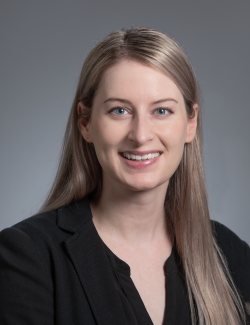
Briana De Miranda, Ph.D., associate professor in the Department of Neurology, was selected to serve on the Parkinson’s Disease Exposome Integration Task Force, an initiative of the International Parkinson and Movement Disorder Society, focused on advancing understanding of how environmental and lifestyle factors contribute to Parkinson’s disease risk and progression.
The task force’s mandate is to define, validate, and integrate the first poly-exposure risk score for Parkinson’s disease, creating an evidence-based tool that captures the impact of environmental and lifestyle determinants alongside genetic and clinical information.
De Miranda, whose research focuses on environmental toxic exposures and the mechanisms that drive Parkinson’s-related neurodegeneration, applied to join the task force because of its close alignment with her scientific work.
“The primary goal is to address an unmet need in Parkinson’s disease research, understanding how environmental exposures shape Parkinson’s disease risk, progression, and overall disease presentation,” De Miranda said.
Although the task force has not yet convened, members will work toward developing a comprehensive framework that evaluates how cumulative exposures across a person’s lifetime influence Parkinson’s disease. Known environmental risk factors include exposure to pesticides, industrial solvents, heavy metals, and air pollution. The group will examine how these exposures interact with lifestyle and genetic factors to identify combinations that may increase disease risk, as well as factors that could potentially offer protection.
The initiative reflects a growing shift in Parkinson’s disease research. While the disease was once considered primarily genetic, decades of research have shown that most people diagnosed with Parkinson’s do not carry inherited genetic mutations that directly cause the disease. Instead, evidence suggests that Parkinson’s disease often results from a complex interaction between genetic susceptibility and environmental influences.
By integrating environmental, lifestyle, genetic, and clinical data, the task force aims to help researchers develop a broader understanding of Parkinson’s disease origins and progression.
“Addressing the role of environmental and external factors in Parkinson’s disease requires global collaboration and a multidisciplinary approach,” De Miranda said. “I’m honored to contribute to this international effort, which has the potential to transform how we assess risk, understand disease heterogeneity, and build a more complete picture of neurodegeneration, ultimately identify new strategies for prevention and intervention.”