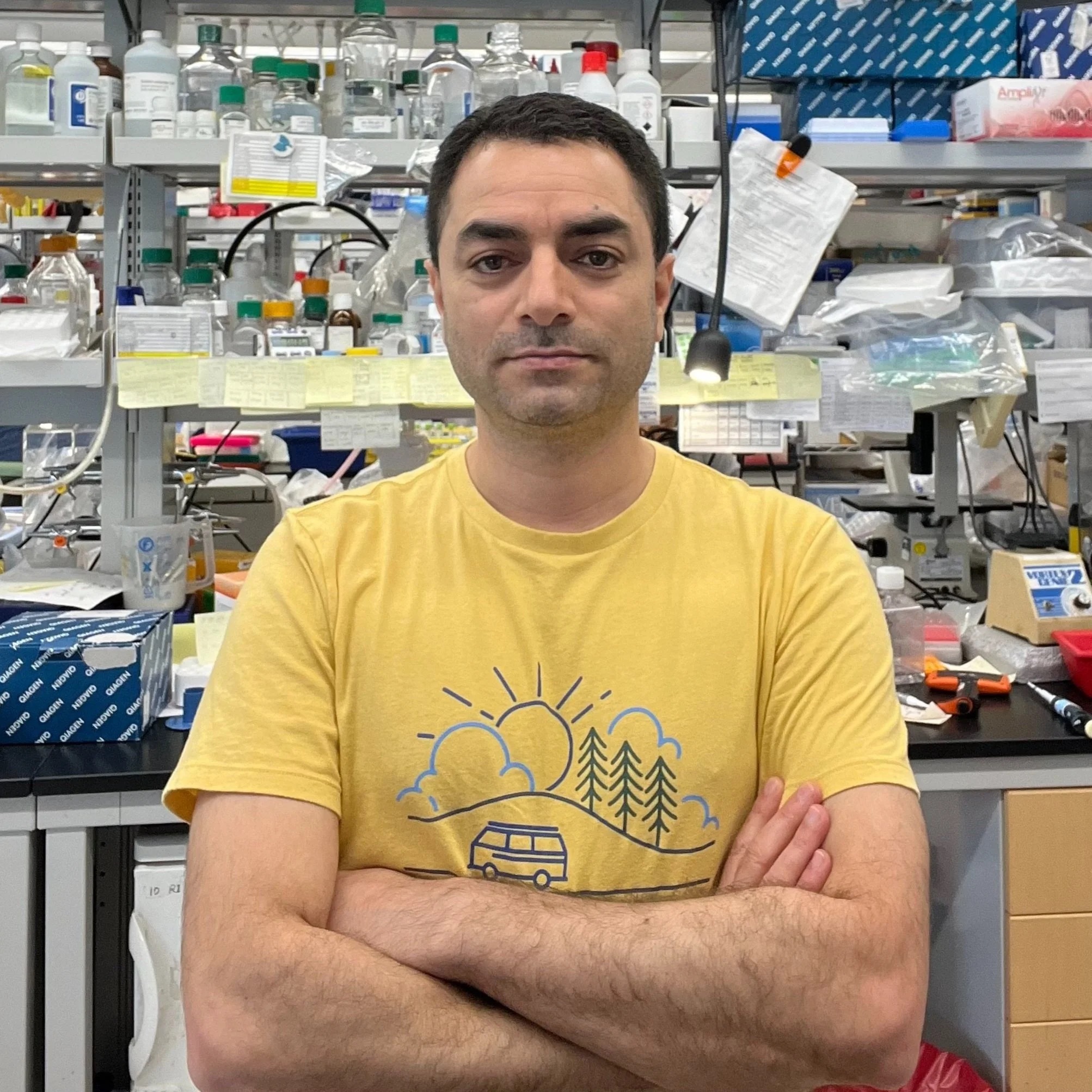
 Tariq A. Najar, Ph.D., joined the UAB Department of Microbiology as an assistant professor in September. He completed his undergraduate and graduate education at the University of Kashmir in India, earning a bachelor's degree in biochemical sciences and a master's degree in biochemistry. He later pursued his doctoral research at the Indian Institute of Science (IISc) in Bangalore, India, where his work focused on immunology, protein engineering, and rational vaccine design.
Prior to joining UAB, Najar completed his postdoctoral fellowship in the laboratory of Dan Littman, M.D., Ph.D., at NYU Grossman School of Medicine. His research investigated the complex crosstalk between the gut microbiota and the host immune system, the epigenetic regulation of immunity, and CD4+ T cell dynamics across healthy, inflammatory, and cancerous tissues. This multidisciplinary background in fundamental biochemistry, molecular immunology, and cellular physiology forms the foundation of his independent research program at Heersink School of Medicine.
Learn more about his journey and what drives his passion for discovery.
What inspired you to pursue a career in this field?
Najar: I have always been fascinated by the complex interplay between molecular architecture and immune homeostasis. Early in my training, I observed how subtle conformational shifts in a protein or specific microbial signals could fundamentally reprogram immune cell function, demonstrating the immense potential of manipulating these pathways. The dual nature of the immune system to either protect against infection or drive devastating pathology makes it one of the most compelling frontiers for basic mechanistic discovery and translational breakthroughs.
What aspects of your new role here are you most excited about?
Najar: I am thrilled to join a vibrant, highly collaborative scientific community at UAB Medicine. Being appointed in the Department of Microbiology, along with affiliations with the O’Neal Comprehensive Cancer Center and the UAB Barrier Immunity, Inflammation, and Neoplasia (BIIN) Program, offers the perfect multidisciplinary ecosystem for me to advance my research program. I am energized by the opportunity to establish my independent research laboratory, build cross-disciplinary collaborations with clinical and basic science colleagues, and recruit and mentor enthusiastic students and postdocs who are passionate about tackling challenging problems in immunology.
What is your primary area of expertise, and what sparked your passion for it?
Najar: My primary area of expertise lies at the intersection of host–microbe interactions, tissue immunity, T cell plasticity, and tumor immunology. My passion took shape during my postdoctoral work investigating how environmental and microbial cues in barrier tissues educate and reprogram T cells. Observing how these regulatory mechanisms can be co-opted by tumors, or harnessed to revitalize anti-tumor immunity, convinced me that understanding immune cell plasticity holds the key to engineering next-generation immunotherapies and targeted strategies for chronic inflammatory diseases.
What are your goals for making an impact through both your teaching and research in this role?
Najar: In research, my goal is to lead a world-class, high-impact, well-funded research program that uncovers the mechanistic underpinnings of immune cell regulation in mucosal and tumor microenvironments, ultimately translating these insights into innovative therapeutic strategies. In teaching and mentorship, I am committed to cultivating an inclusive, intellectually stimulating training environment for Ph.D. and M.D./Ph.D. scholars and postdoctoral fellows in my laboratory. By training the next generation of biomedical scientists to approach complex biological questions with rigorous experimental design, structural clarity, and creative problem-solving, I hope to leave a lasting mark on both the scientific community and the institution.