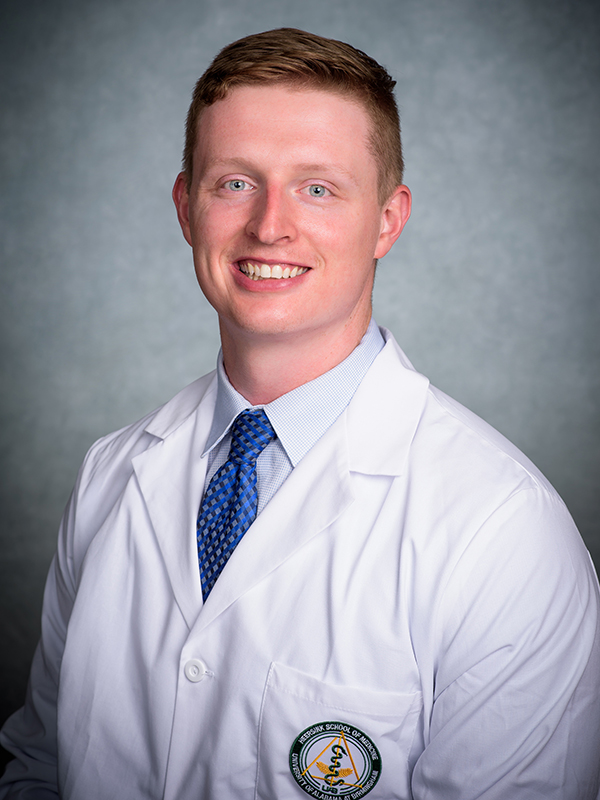
 Alexander "Alex" Kofskey, M.D., M.S.H.A., joined the UAB Department of Anesthesiology and Perioperative Medicine as an assistant professor in the Division of Multispecialty Anesthesia on Sept. 1, 2026.
Kofskey earned a Bachelor of Science in Biology with academic distinction from the United States Air Force Academy in 2018 before attending the UAB Heersink School of Medicine through the U.S. Air Force Health Professions Scholarship Program. He graduated from medical school in 2022 and remained at UAB to complete his anesthesiology residency in 2026. He also earned a Master of Science in Health Administration from UAB in August 2026.
A captain in the United States Air Force Medical Corps, Kofskey serves as an anesthesiologist with the U.S. Air Force Special Operations Surgical Teams (SOST). In this role, he helps provide specialized trauma resuscitation and damage control surgical support for America's special operations forces while serving as clinical faculty at UAB.
Learn more about his journey and what inspires his work.
What inspired you to pursue a career in this field?
Kofskey: I was drawn to anesthesiology because of the team-first attitude and ability to operate under high pressure that I saw from the fantastic residents and attendings I worked with as a medical student at UAB. When a patient is in crisis in the operating room, everyone looks to the anesthesia team to maintain calm and perform under pressure, something that I enjoy being a part of very much.
In terms of my Air Force role, SOST provides unique capabilities in trauma resuscitation and damage control surgery in austere environments to support America's special operations forces, further expanding my desire to work in high-stakes environments.
What is your primary area of expertise within your field, and what sparked your passion for it?
Kofskey: I am new as an attending physician, so it is hard to say I have an area of expertise so far. Given my SOST role, I do have a passion for anesthesia for trauma patients and massive resuscitation. Anesthesia serves a very important role in getting these trauma patients through periods of crisis and can make a tremendous positive impact on the outcome of these cases.
What aspects of your new role here are you most excited about?
Kofskey: I am excited to care for the wide variety of patients we see at UAB and to educate the next generation of anesthesia residents. I am extremely grateful for my anesthesia residency training at UAB and all the opportunities it provided for me, something that I hope to pay back to the residents coming after me in the program.
What are your goals for making an impact through both your teaching and patient care in this role?
Kofskey: I hope to inspire residents to push themselves personally and professionally to grow into the attending physicians they want to be, and our nation needs them to be. I believe all trainees here have greatness within them, and I am honored to be a small part of their development.
In terms of patient care, my desire is for patients to feel comfortable and safe knowing I am leading their anesthesia team. While surgery may be routine for surgical and anesthesia staff, it can be one of the most memorable experiences of a patient's life. I hope to make that experience as positive as possible.
Anything else you'd like to add?
Kofskey: I am grateful for the opportunity to continue serving both the UAB community and the United States Air Force. UAB played a significant role in my development as a physician, and I look forward to contributing to the department's mission through patient care, education and service.