Explore educational resources developed by the UAB Medical Genomics Laboratory. Each resource may be viewed on this page or downloaded as a PDF.
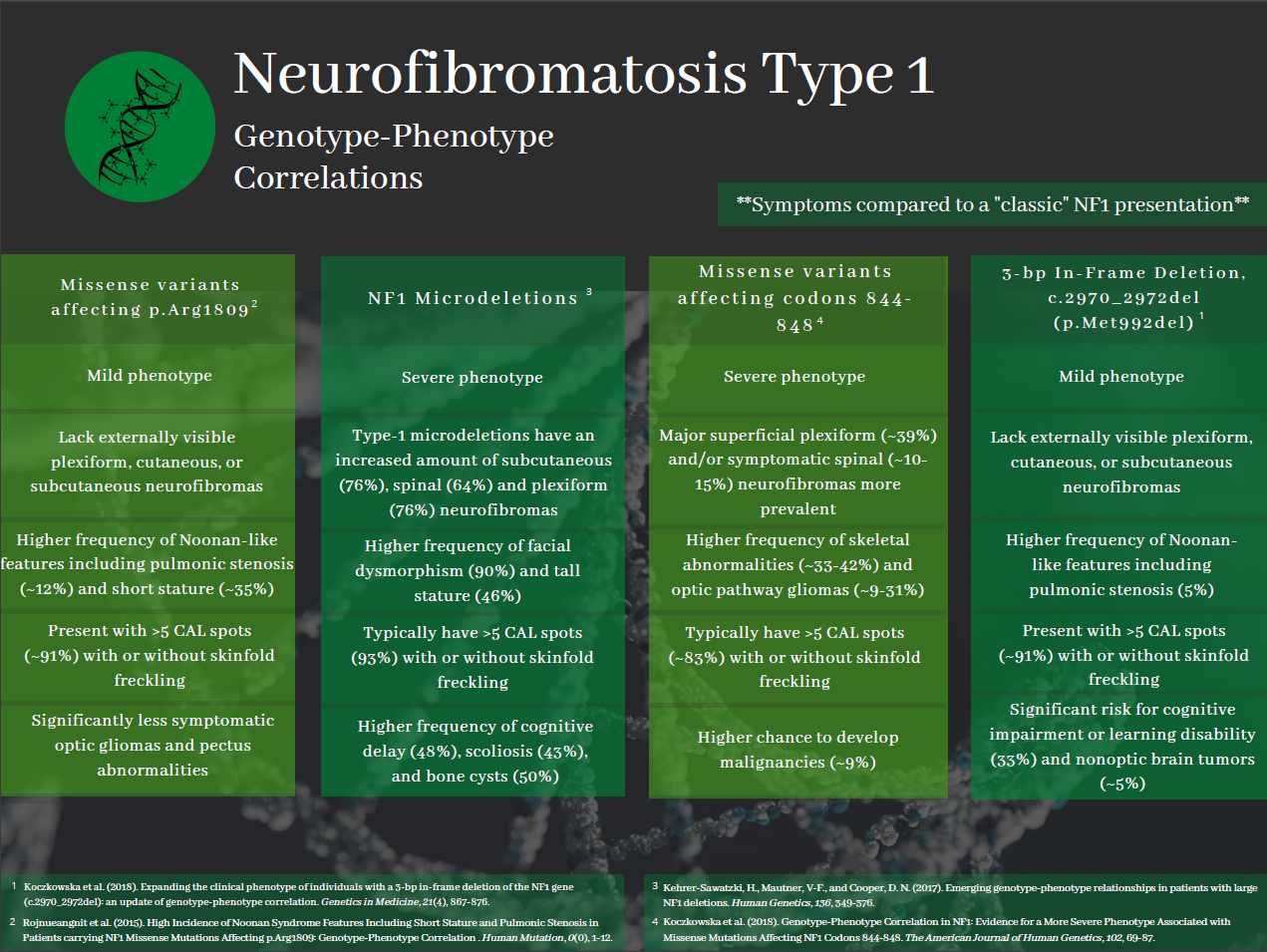
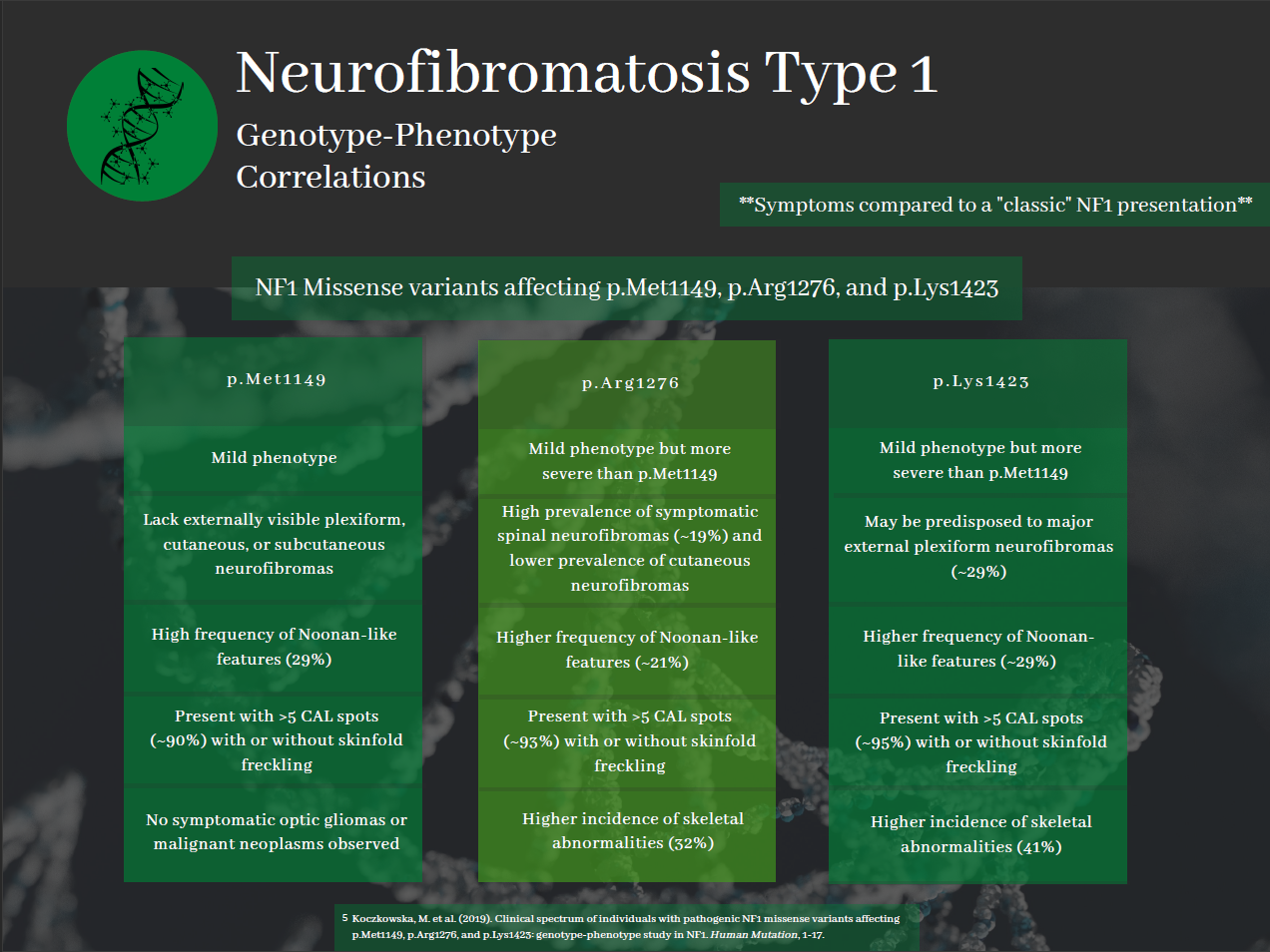
Genotype-Phenotype Correlations
For neurofibromatosis type 1, several genotype-phenotype correlations have been established. Some variants are associated with milder presentations, while others may be associated with more severe or distinctive clinical features.
The resource below provides an overview of selected NF1 variants and their associated phenotypic characteristics.
Download the Genotype-Phenotype Correlations PDF
Next-Generation Sequencing Versus RNA-Based Testing
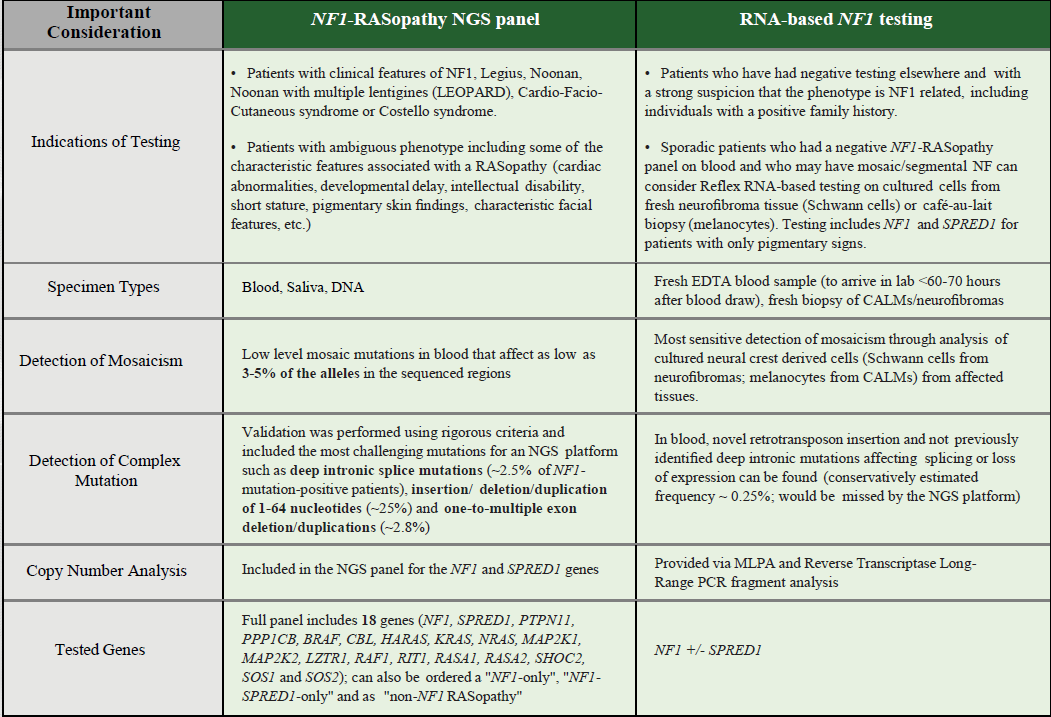
The Expanded NF1 RASopathy Panel by Next-Generation Sequencing (RAS-NG) includes 18 genes associated with RASopathy spectrum disorders: NF1, SPRED1, PPP1CB, PTPN11, BRAF, CBL, HRAS, KRAS, NRAS, MAP2K1, MAP2K2, LZTR1, RAF1, RIT1, RASA2, SHOC2, SOS1, and SOS2.
The assay analyzes the coding regions and approximately 50 base pairs of flanking intronic sequence for the targeted genes. It also includes regions containing pathogenic NF1 variants identified in the UAB cohort and more than 65 known deep intronic variants.
Average sequencing coverage is approximately 1,600×, with more than 98% of the NF1 coding region covered at greater than 350× and 99% covered at greater than 200×. This depth of coverage permits detection of low-level mosaicism at approximately 3%–5% variant allele fraction with 95% confidence, depending on regional coverage.
The resource below outlines important considerations when selecting between the Expanded NF1 RASopathy Panel by NGS and RNA-based NF1 testing.
Download the NGS Versus RNA-Based Testing PDF
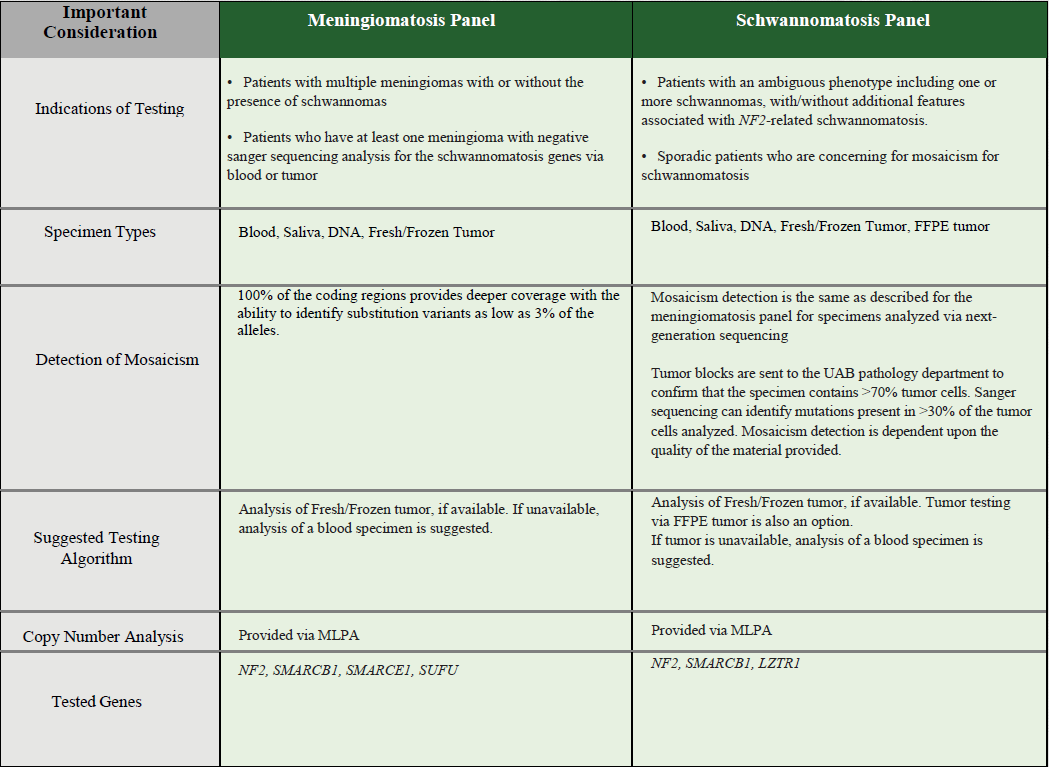
Schwannomatosis and Meningiomatosis Testing at UAB MGL
The UAB Medical Genomics Laboratory offers custom-designed next-generation sequencing panels for patients with schwannomatosis- or meningiomatosis-related phenotypes.
- Schwannomatosis/Multiple Schwannoma Panel: NF2, SMARCB1, and LZTR1
- Meningiomatosis/Multiple Meningioma Panel: NF2, SMARCB1, SMARCE1, and SUFU
Each panel analyzes the coding regions and approximately 50 base pairs of flanking intronic sequence for the targeted genes. Average sequencing coverage exceeds 1,500×, with more than 99% of the coding regions covered at ≥350× and 100% covered at ≥200×. This depth of coverage permits detection of low-level mosaicism at approximately 3%–5% variant allele fraction with greater than 95% confidence, depending on regional coverage.
The resource below outlines important considerations when selecting between the Meningiomatosis/Multiple Meningioma Panel and the Schwannomatosis/Multiple Schwannoma Panel.
Download the Schwannomatosis and Meningiomatosis Testing PDF