
Grad Programs
The MSPH with a concentration in Biostatistics is offered by the Department of Biostatistics.
The MSPH with a concentration in Biostatistics is an applied statistics degree with a focus on public health. This program is open to all qualified applicants with relevant undergraduate, masters, medical, or health science professional degrees.
This program is an ideal post-medical or other health science degree training program for fellows and faculty members interested in developing skills required for clinical research. A graduate of this program will have the academic training to develop and lead independent research programs and projects. Further, the MSPH program may be a first step towards a doctoral program in biostatistics or public health.
Further details about the Department of Biostatistics Graduate Programs and funding opportunities can be obtained by contacting the Student Coordinator and Administrative Program Director, Nicole Cross, at nicolen@uab.edu or the Vice Chair of Education, Dr. Stacey Cofield, at scofield@uab.edu.
Admission
Applicants to the MSPH program should have a strong academic record and meet the minimum requirements for admission to the School of Public Health. In addition, the applicant's undergraduate curriculum must include a two-semester sequence of calculus or equivalent, linear algebra, and proficiency in computing. The Department of Biostatistics admits MSPH students in the fall term each year. Interested students should apply through sophas.org.
The PhD in Epidemiology is offered by the Department of Epidemiology.
The PhD in Epidemiology emphasizes epidemiologic study design and data analysis. The program is designed to prepare exceptionally qualified individuals for a career of research and teaching. Admission is competitive. Applicants should have earned a MPH, MSPH, MS, or equivalent with a strong background in epidemiology and statistics. Students who complete the PhD should master the skills required for conducting independent research in epidemiology, with a firm background in epidemiology, biostatistics, and information management. Specific areas of concentration include chronic diseases, infectious diseases, molecular epidemiology, and injury epidemiologic methods.
Further details about the PhD in Epidemiology may be obtained by contacting the program director, Dr. Russell Griffin, at russellg@uab.edu. You may also contact the coordinator of graduate academic programs, Kimberly Hawkins King, at hawkinsk@uab.edu or by calling (205) 975-9749. For funding questions regarding our PhD program, please contact Dr. Griffin.
Curriculum
To earn the PhD degree in Epidemiology, students must complete a minimum of 60 total credit hours of academic course work. Of these, 18 hours are required core biostatistics and epidemiology courses. Twenty-four semester hours must be earned in doctoral level didactic epidemiology courses and/or advanced biostatistics courses. GRD 717: Principles of Scientific Integrity is also a required course.Students must complete at least 12 semester hours of directed research (EPI 798) and 12 semester hours of dissertation research (EPI 799). Additionally, students must complete at least two semesters in candidacy (of EPI 799) before being allowed to graduate.
Admission
Application Deadlines
Initial review of applications and priority consideration for funding deadlines are listed below. Final admission deadlines that fall after our “priority funding deadline” are also listed below for domestic applicants and international applicants.
- U.S. applicants: priority funding deadline - January 10
- International applicants: priority funding deadline - January 10
- U.S. applicants: final deadline to apply – May 15
- International applicants: final deadline to apply – April 1
The Department of Epidemiology admits PhD students in the Fall term each year. Interested students should apply online through the UAB Graduate School. Please submit all academic transcripts, two letters of recommendation, GRE scores, your personal goals/career goals statement, a current copy of your CV/resume, etc., along with your application for admission. International students should also submit a World Education Services (WES/ECE, or similar) transcript evaluation along with your application materials.
Review the minimum requirements for admission to the School of Public Health.
The MSPH with a concentration in Applied Epidemiology is offered by the Department of Epidemiology.
The MSPH with a concentration in Applied Epidemiology is an academic degree designed for students who wish to receive education and training emphasizing epidemiologic research methods. In addition, students who wish to enter doctoral-level training should consider majoring in epidemiology at the master's level. This program emphasizes training in biostatistical concepts and their application in epidemiologic research.
Curriculum
In contrast to the epidemiology focus of the MPH, the MSPH with a concentration in Applied Epidemiology requires the completion of didactic course work and a publishable research paper. There is no internship requirement. This degree can be completed in as little as four semesters or 16 months of full-time course work.
Admission
Review the minimum requirements for admission to the School of Public Health.
The MPH with a concentration in Epidemiology is offered by the Department of Epidemiology.
The MPH with a concentration in Epidemiology is an academic degree designed for students who wish to receive education and training to prepare them for a career in the field of epidemiology. In addition, students who wish to enter doctoral-level training should consider majoring in epidemiology at the master's level. The program emphasizes understanding the role of epidemiology within the broader context of the field of public health.
Curriculum
In contrast to the Applied Epidemiology focus of the MSPH, the MPH program does not require the completion of a research project. It does require an internship. The MPH with a concentration in Epidemiology typically takes five semesters or 20 months of full-time coursework to complete. Part-time coursework generally takes students at least six to eight semesters to complete.
Admission
Review the minimum requirements for admission to the School of Public Health.
The Master of Public Health (MPH) with a concentration in Population Health is an individualized concentration designed for professionals working in healthcare-related fields or for students enrolled in one of our coordinated degree programs (e.g., nursing, medicine, physician assistant studies, optometry, etc.). This concentration provides insight into the critical role that public health plays in targeting solutions at the population (rather than patient) level. Students in this concentration will be trained to consider the health of populations in all policies, across all professions, using a systems approach.
Curriculum
Students in this concentration must complete 42 credit hours of public health-related coursework, including the 14-hour MPH core (based on the Evidence-Based Public Health framework), a 3-hour course on multidisciplinary perspectives on Population Health, an Applied Practice Experience (Internship), and an Integrative Learning Experience (Capstone). In addition, students select from all available master’s-level courses to design a curriculum that supports their career goals. This includes courses offered by our five departments (Biostatistics, Environmental Health Sciences, Epidemiology, Health Behavior, and Health Care Policy & Organization) as well as in our Global Health program. Courses outside the School of Public Health may also be included in the curriculum if they include sufficient population health content.
Full-time students generally complete this degree in two years or less (four-to-five semesters).
Procedures for Designating Population Health Concentration Competencies
All MPH concentrations accredited by the Council on Education for Public Health (CEPH) require that graduates demonstrate at least five competencies in addition to the foundational competencies common to all CEPH-accredited MPH programs. As an individualized concentration, Population Health students have the opportunity to pursue a set of competencies uniquely suited to their particular career goals. Students work with the Population Health program coordinator to select five competencies from a comprehensive list drawn from all approved courses.
Once the competencies are identified, the student and program coordinator agree upon a viable plan of course completion, based on course availability and the student’s other commitments (clinical rotations, practicums, etc.). The program coordinator enters the selected courses into the student’s Plan of Study, a matrix which includes all courses and competencies included in the student’s individualized concentration.
Admission
To apply for this degree, you will submit your initial application packet through the SOPHAS application system (link to SOPHAS provided). Upon acceptance to the program, you will then be prompted by the UAB Graduate School to submit a supplemental application through the UAB Graduate School website.
Applicants to this program must meet the general admission requirements for the Master of Public Health degree program.
Students should note that the Population Health program curriculum has been updated. If a student is submitting to switch from a different degree program or department into a Coordinated Degree or the General MPH in Population Health Degree, the student will be responsible for completing the current Population Health program requirements. Students should meet with the current program manager prior to submitting a petition to switch programs.
 Photo by: Arik Sokol, Opus Media Productions
Student Spotlight
I worked as an ER nurse for years and was deeply saddened by the effects of what I felt were preventable illnesses. I began to realize the potential to prevent illness through expanded access to health education. This experience led me to pursue a master's in Public Health with a concentration in Population Health, so that I can be better equipped to educate vulnerable populations.
My goal is to help the public make more informed decisions about their health. I hope that with this degree, I can focus on providing access to health information in rural areas.
- Lucia M. Robertson, RN, MPH (’24)
Contact
For additional information concerning the Master of Public Health (MPH) with a concentration in Population Health, contact the School of Public Health at soph@uab.edu.
Format: Online, In-Class
The 15-hour Climate and Health Graduate Certificate program will prepare post-bachelor’s students with advanced knowledge in the broad area of climate, weather and weather events, and human health. This can include climate and weather related effects on human and environmental health as well as aspects of preparedness, response, recovery and adaptation to climate and weather events and related disasters.
Students may choose between courses in environmental health, health behavior and global health sciences. Students may choose from several online courses to meet the program requirements.
Applicants not currently enrolled at UAB should apply by completing an application through the UAB Graduate School. Currently enrolled UAB graduate students should apply by submitting the following documents to Julie Brown (jebrown@uab.edu).
Admissions requirements include:
- Transcripts from ALL higher education institutions you attended and received college credit (unofficial transcripts will suffice)
- A bachelor’s degree with an undergraduate GPA of 3.0 or higher
- Statement of Purpose
Certificate students may apply for the MPH or other degree programs within the UAB School of Public Health and if admitted, the courses taken will be considered counting towards the completion of the degree program. If you have questions about the program prior to enrolling, please reach out to Julie Brown at jebrown@uab.edu.
 The Graduate Certificate in Global Health Studies is an interdisciplinary program designed for students who seek a broad and flexible set of skills for understanding contemporary health challenges and thinking about how they might best be solved to improve health and health equity worldwide. The curriculum emphasizes the development of core skills in critical thinking, problem-solving and the importance of direct experience (research, study abroad, service learning and advocacy).
This 15-hour certificate program is offered to any UAB graduate student who wishes to gain knowledge and skills in the field of global health. Students may choose from several online or classroom-based courses to meet the requirements for this program. Upon successful completion of program requirements, students will receive a certificate of completion awarded by UAB. This certificate can be used as part of UAB’s new interdisciplinary master’s degree program. Application deadlines for this certificate follow the UAB Graduate School’s application deadlines for Degree-Seeking Students.
Currently enrolled UAB graduate students should apply by submitting the change of program form.
Applicants not currently enrolled at UAB should apply by completing an application through the UAB Graduate School.
Admissions requirements include:
- A Bachelor’s degree from a regionally accredited institution
- 3.0 GPA
- Statement of Purpose
Certificate students may apply for the MPH or other degree programs within the UAB School of Public Health and if admitted, the courses taken may be counted towards the completion of the degree program (per department discretion).
Undergraduate students currently enrolled in any major are eligible to apply to the GHS Certificate. An application must be submitted to the UAB Graduate School. Select “Global Health (CERT)” as the intended program of study.
To be considered for the certificate, students must have:
- At least a 3.5 GPA in undergraduate courses.
- Completed 60 undergraduate credit hours, and at least 36 hours at UAB.
Once admitted to the certificate, students must meet the following:
- Maintain a 3.5 GPA in undergraduate courses.
- Receive a B or better in graduate courses taken while still an undergraduate student.
- Maintain full-time student status at UAB.
For students in the certificate program who have not yet earned a bachelor’s degree, this certificate can be awarded once all requirements are completed and the bachelor’s degree has been conferred.
Course Descriptions
Current course names and descriptions are available below; please note they are subject to change. You can also search for current and past course offerings on UAB's Class Schedule Listing site. Choose "GHS" in the Department drop-down to find Global Health Studies courses.
A comprehensive list of all Global Health Studies courses is included in the UAB Graduate Catalog; however, that listing does not reflect what is being offered this year.
-
GHS 600: Fundamentals of Global Health
This course is designed to introduce students to the foundations of global health programs, policies and practices. Students will explore the history of the field of global health, including its roots in colonial exploration, tropical medicine, and imperialism, and the current paradigms shifting the field to a collaborative and transnational effort to improve health equity for all and reduce the global burden of diseases. The course will emphasize the main concepts necessary to examine the critical links between health outcomes and social, environmental, and economic determinants at multiple levels of scale and across low, middle, and high -income countries. The course will be global in coverage but will focus on the burden of disease in low- and middle-income countries and on the health of the poor in low-resource or resource-scarce settings. 3 Hours.
-
GHS 601: Global Health Partnerships & Development
Global health is an emerging and evolving field of health research and practice. Working in global health means that researchers, practitioners, and advocates work alongside and within a complex system of governance that has emerged over time and in response to very significant global health events. This course offers a critical analysis of global health programs and partnership initiatives over time and their impact on health and development. Using a historical lens to examine the growth of global health as a field of research and practice, this course examines the very significant paradigm shift from the field of international health to global health. By exploring key historical events and interventions, this course also explores why global health diplomacy is so important to cooperation among countries as well as global health security and how global health programs are funded, and programs and initiatives are implemented in various bilateral, multilateral, and private-public partnerships. 3 hours.
-
GHS 603: Immigrant, Migrant, and Refugee Health
This course will introduce students to the inter-relationships between migration and health, focusing on the myriad of health issues experienced by migrant populations. The course will focus on both communicable and non-communicable health issues among migrating populations. The course will examine health issues among all types of migrant populations with a particular focus on the categories of ‘displaced peoples’, and the resultant state and humanitarian responses surrounding health and social (public health) services. This course frames global health in broad terms to include the underlying social and economic conditions, including climate change, economic underdevelopment, and political instability, which displace people, or motivates them to migrate, and which present barriers to achieving health, mental health, and wellbeing in immigrant, migrant, and refugee communities. We explore how violence, social suffering, health, disease, and mental health are intertwined with displacement and migration. 3 hours.
-
GHS 604: Infectious Diseases of Global Health Significance
The purpose of this course is to equip participants with up-to-date knowledge of global pandemic preparedness and control measures necessary to protect present and future generations. This course will expose students to Global Health agreements such as the pandemic treaty and International Health regulations. The course also challenges students to find new innovative strategies for the prevention of the big 3 (HIV, TB & Malaria) infectious diseases and familiarize students with global health priorities. To achieve this, the course will introduce concepts of disease infectious disease transmission and disease transmission dynamics and introduce the principles of global health security. The course adopts multidisciplinary, interdisciplinary, and transdisciplinary perspectives in studying the factors that contribute to the impact of pandemics and major outbreaks using Smallpox, malaria, and COVID-19 as an important historical lens. Students will explore some of the WTO policies that facilitate or preclude the discovery of vaccines and distribution of vaccines and medical commodities during pandemics. Throughout the course, emphasis will be placed on equity, one health, and universal health coverage. 3 Hours.
-
GHS 606: Critical Issues in Global Maternal Child Health
This course is designed to equip students with skills and Global Health competencies critical in the Global MCH practice. Mothers and children in low-and-middle-income countries and other resource-limited settings worldwide are among the most vulnerable and disadvantaged world's population. This course defines the Global Maternal and Child Health (MCH) discipline, describes the critical issues and challenges and explores the current and potential global strategies and solutions through the eyes of the Global MCH experts, currently engaged in the Global MCH field. This course also reviews the social determinants of Global MCH, ethical and social justice and equity considerations, and provides students with the opportunity to apply the learned Global MCH skills in the analysis, discussion and solutions in addressing the real-life Global MCH issues. 3 Hours.
-
GHS/HPO 645: Comparative Health Systems and Policy
This course provides a comprehensive survey of a number of healthcare systems from low-, middle-, and high-income countries, situating the U.S. and other national experiences in a comparative cross-national frame. The course provides frameworks for students to analyze in diverse settings the different ways that health policy is developed and implemented, given the resources, capacities, and systems of each country. The course will also examine the ways in which health care is organized and delivered, along with underlying global public health principles and impacts. By comparing health systems and policies, globally, students will reflect on how a country’s social-historical context and values, geography, polity and economy influence the way that health care is provided and its relationship with population health, as well as how health policies influence the quality of life. 3 hours.
-
GHS 649: Interprofessional Global Health Service Learning
This course provides students with an opportunity to work in small teams to address a global health problem in collaboration with a community partner. The global health problem to be addressed can be at a local site (with a local agency or partner), a site within the US, or an international site (with a US or non-domestic agency or partner). Interprofessional teams of 4-6 graduate and professional students will apply concepts and theories related to global health, interprofessional collaboration, team building, leadership, community partnerships, business models, and appropriate framework for developing and implementing a plan to address a specific global health problem with a community partner. 3 hours.
-
GHS 690: Special Topics in Global Health
This special topic course will be used in the graduate global health certificate program to cover emerging issues or specialized content not represented in the main curriculum. 1-6 hours.
-
IDGH 620: Global Health Ethics
This course intends to prepare global health practitioners and researchers with the tools they need to work most effectively and meaningfully with communities from a broad ethical point of view. Global Health is never neutral, and is perhaps most potentially complicated, fraught, and difficult when it comes to issues surrounding individual and community health. A sophisticated and nuanced grasp not only of the ‘rules’ but also of the broader intellectual, practical, historical, and moral issues is an essential basis in this day and age for a successful – and less stressful - career as a health professional.
This course uses a seminar-style format, which asks each student to take leadership in understanding and guiding in relation to our planned topics. The heart of the course focuses on the systematic exploration of the history, contexts, issues and outcomes related to specific case studies that are currently shaping how we understand the moral, ethical, and social justice implications of global health. Conversations around these cases, especially the ones that are currently ongoing, can be very difficult, even fraught. Developing skills for engaging in those conversations is an essential part of the course.
Questions
For questions about the Global Health Studies Certificate please contact Meredith Gartin, Program Director, at gartin@uab.edu, or Misty Altiparmak, Graduate Student Coordinator, at maltima@uab.edu.
Please contact the Sparkman Center at sparkmancenter@uab.edu for additional information on experiential learning opportunities, internships, fellowships, and ways to become involved in global health activities.

Format: Online, In-person
The Master of Science in Global Health: an innovative, multi-institutional degree that equips learners for impactful professional global health careers

Offered jointly by the UAB Heersink School of Medicine opens a new website and the UAB School of Public Health opens a new website, the UAB Master of Science in Global Health (MSGH) prepares students for global health careers through research, collaboration, policy, and evidence-based solutions.
Why Study Global Health at UAB?
The UAB MSGH program prepares students to drive meaningful change in an increasingly interconnected world. Through a unique blend of research, collaboration, and real-world application, students gain the expertise to address global health challenges, advance health equity, and improve lives across diverse populations. With access to internationally recognized faculty, global partnerships, and innovative learning experiences, UAB provides the foundation for a successful career in global health.
What Sets Us Apart?
- A Truly Global Classroom: Collaborate with students from around the world through the Foundations of Global Health I and II courses. As part of the Global Health Consortium opens a new website, you'll learn alongside peers from international partner universities, gaining firsthand experience working across cultures, disciplines, and time zones.
- A Unique Interdisciplinary Degree: The MSGH is the first degree of its kind in Alabama and one of only a few programs in the United States jointly offered by a school of medicine and a school of public health. This unique structure provides students with a comprehensive perspective on global health challenges and solutions.
- Access to Global Health Networks: Students benefit from extensive collaborations with the Sparkman Center for Global Health opens a new website, the Mary Heersink Institute for Global Health opens a new website, the Global Health Consortium opens a new website, and a network of international partners. These connections create opportunities for mentorship, research, professional development, and global engagement.
- Mentorship from Experienced Global Health Leaders: Our faculty mentors are actively engaged in interdisciplinary global health research, practice, policy, and implementation around the world. Students gain insights from experts working to improve health outcomes across diverse settings and populations. All MSGH students work directly with a faculty mentor on their research project.
- International Learning Opportunities: Expand your global perspective through optional international experiences, including the annual Global Health Learning Symposium hosted in partnership with universities around the world. These experiences allow students to engage with global health challenges in real-world settings. Participating students receive a travel stipend.
- A Commitment to Health Equity: Health equity is at the core of the UAB MSGH experience. Drawing from Alabama's unique history in the Civil Rights Movement, students explore the social, structural, and policy factors that influence health outcomes locally and globally, developing the skills to create more equitable health systems.
What Can You Do with a Master's in Global Health?
Graduates are prepared for leadership and professional roles across healthcare, public health, research, government, and international development, including:
- Global Health Program Manager
- NGO or International Development Specialist
- Health Policy or Public Health Analyst
- Research or Clinical Trials Coordinator
- Health Equity Consultant
- Community Health or Health Education Specialist
- Medical and Health Services Manager
- Academic or Postsecondary Health Educator
The program also serves as a strong foundation for those pursuing advanced professional degrees, including medicine, dentistry, nursing, pharmacy, and other health professions.
At UAB, you'll gain more than a degree. You'll join a global community dedicated to advancing health equity and creating meaningful change around the world.
Apply Now Opens an external link.
Admissions
-
Application Deadlines
Fall Entry Term
- Domestic Applicants: July 1
- International Applicants: April 1
Summer Entry Term
- Domestic Applicants: April 1
Please note the application deadline is the date by which your application fee must be paid and your application submitted. Supporting materials, such as recommendations or transcripts, will continue to be accepted after this deadline.
-
Admission Requirements
- Online Application opens a new website
- Complete and submit the UAB Graduate School online application.
- Application Fee (Non-Refundable)
- Domestic applicants: $50
- International applicants: $60
- Letters of Recommendation Submit two letters of recommendation from academic or professional references who can speak to your qualifications and potential for graduate study
- Résumé/Curriculum Vitae (CV)
- Statement of Purpose and Objectives
- Official transcript(s)
- Additional Requirements for International Applicants: International applicants opens a new website must satisfy all applicable application requirements set by the UAB Graduate School (e.g., transcript evaluation, English proficiency exam scores).
For complete application instructions, please visit the UAB Graduate School Admissions opens a new website website.
Curriculum
Students may choose between two program formats: the 36-credit-hour Scholarly Project Track or the 38-credit-hour Thesis Track. Both options require students to complete a rigorous, hypothesis-driven research project. The Scholarly Project Track integrates research activities directly into the curriculum, while the Thesis Track provides additional dedicated research time and individualized mentorship with an established faculty researcher.
Curriculum Flow
The MS in Global Health offers career-building, tailored mentorship, and professional networking. Fieldwork is optional. For information regarding approved electives, please see the Graduate Catalog opens a new website.
-
Fall I
Courses:
- GHM 601: opens a new website Foundations of Global Health I (3 Hours)
- GHS 600: opens a new website Fundamentals of Global Health (3 Hours)
- Approved Elective (3 Hours)
- Approved Elective – Additional elective taken either in fall or spring for Thesis Track (3 Hours)
Students begin the research project development/advisor selection process.
-
Spring
Courses:
- GHM 602: opens a new website Foundations of Global Health II (3 Hours)
- GHM 604: opens a new website Global Health Research Methods (3 Hours)
- Approved Elective (3 Hours)
- Approved Elective – Additional elective taken either in fall or spring for Thesis Track (3 Hours)
Optional: Students have the opportunity to participate in a two-week symposium held each April in either Manipal, India, or Hamilton, Ontario, Canada. Participating students will receive a travel stipend. The associated elective course is IDGH 625.
-
Summer
Courses:
- IDGH 687/699: opens a new website Scholarly Project/Master’s Directed Research (3 Hours)
- IDGH 620: opens a new website Global Health Ethics (3 Hours)
- PUH 600: opens a new website Overview of Public Health (3 Hours)
-
Fall II
Courses:
- IDGH 688 opens a new website / IDGH 699 opens a new website: Scholarly Project/Master’s Directed Research (4/3 Hours)
- IDGH 690: opens a new website Writing for Global Health (5 Hours)
Student Experiences

Foundations I and II were two of the most transformational courses I have taken in terms of learning tangible concepts of global health work. These courses not only taught me more about global health, but they also taught me how to work effectively on a team spread across countries and time zones.
- Camryn, Foundations I and II
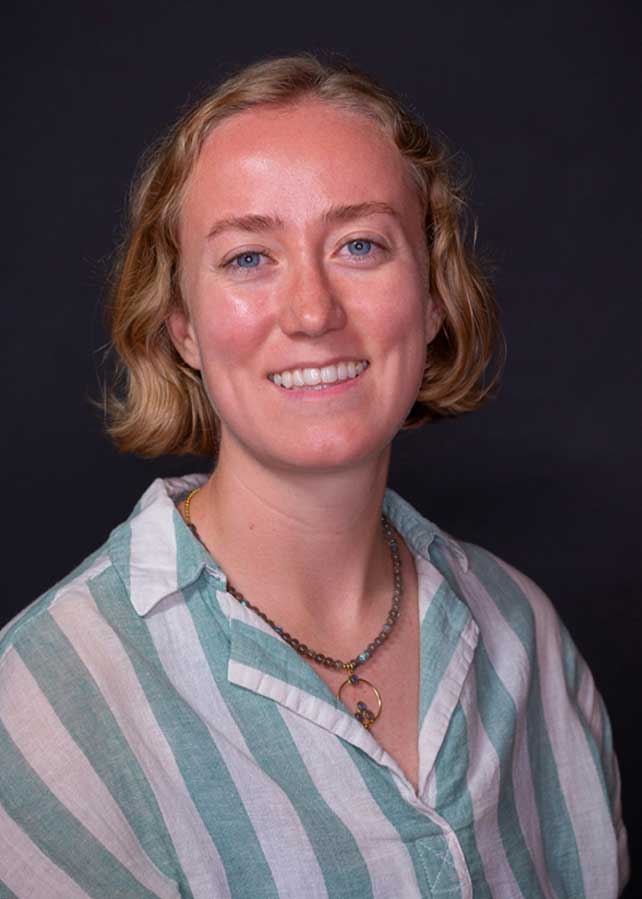 Photo by Jon Steen
Participating in the peer-centered courses of Foundations I and II has been an enriching experience. Foundations I provided a theoretical framework through global health policy analysis, while Foundations II built upon this foundation to equip students with the skills necessary for developing global health project proposals. The structure of both courses mirrors real-world global health work, preparing students for dynamic, international team-based environments. Through these two courses, I have learned the importance of teamwork based on mutual trust, the value of cultivating relationships with team members beyond work requirements, the necessity of using an intersectional lens for analysis, and the ability to critically evaluate the perspectives and biases of all stakeholders. The learning environment of Foundations I and II is particularly beneficial for students like myself who are just starting in the global health field. After completing both courses, I feel confident in my ability to navigate my future within global health.
- Audrey, Foundations I and II

The two-week Manipal Global Health Learning Symposium provided a valuable opportunity to gain new insights into global health while allowing me to develop both personally and professionally. It featured an exploration of the Indian healthcare system, collaborative group work and extensive networking with a mix of participants from eight different global universities. I was able to work on a system mapping activity in the mental health student cluster and had the chance to visit 4 different facilities in Uddupi to map out the local mental health landscape. It was also great to meet some of my Global Health Foundations 1 and 2 group mates from McMaster University in person, after only interacting with them virtually the past two semesters.
- Divya, Symposium
 Photo by Cordelia Capodiferro
Attending the global symposium at McMaster University in Hamilton, Ontario has been one of the most rewarding experiences of my global health master’s journey so far. Our group worked on social medicine, and we chose to compare healthcare systems in prisons, specifically between the U.S. and Norway. One of the most impactful parts of the symposium was hearing from people doing real work on the ground – something we often only study in theory. The symposium was more than a learning experience; it was a reminder of the power of collaboration, community, and shared purpose. The people we met, the stories we heard, and the lessons we learned will stay with us throughout our careers in global health.
- Zuha Fatima, Symposium
Academic Leadership
Co-Directors of the Master of Science in Global Health

Bhekumusa Lukhele, PhD
Assistant Professor, Health Policy and Organization, UAB School of Public Health
blukhele@uab.edu

Matt Heimann, MD
Associate Director for Educational Programs, Mary Heersink Institute for Global Health
mheimann@uabmc.edu
FAQ
-
Is the UAB MS in Global Health offered online?
Yes. Students may complete the program online or through a combination of online and in-person instruction.
-
How many credit hours are required?
Students may complete either a 36-credit scholarly project track or a 38-credit thesis track.
-
Is international travel required?
No. International travel opportunities are optional.
Contact
If you have additional questions, please contact the program’s academic leadership, Dr. Bhekie Lukhele at blukhele@uab.edu or Dr. Matt Heimann at mheimann@uabmc.edu, or program manager Jimika Colvin at jlcolvin@uab.edu.
Ready to make a global impact? Begin your application today or request more information to learn how the UAB Master of Science in Global Health program can help you become a leader in advancing health equity and improving lives worldwide.
Apply Now Opens an external link.The PhD in Health Behavior is offered by the Department of Health Behavior.
Health Behavior doctoral students learn to use theories and methods from the social and behavioral sciences to develop programs that encourage healthy behaviors. They are exposed to state-of-the-art techniques and methods for research and program evaluation. Students study health topics in depth as they apply their knowledge and skills to conducting research and writing proposals and manuscripts. Our doctoral-level training in the social and behavioral sciences places a heavy emphasis on research training and application, with faculty involving doctoral students in their research on a broad range of health issues such as:
- behavioral interventions
- family and adolescent health issues
- obesity prevention
- prevention and control of addictive behaviors
- sexual health risks including HIV/AIDS prevention and treatment
- community based health promotion
- health communication and program evaluation
- translation of research findings
Another vital part of our department's doctoral level training is one-on-one research mentoring, which fosters student development through activities such as participation in manuscript and proposal writing.
We aim to prepare our students as social and behavioral scientists who will conduct rigorous public health research and apply findings. Our graduates have often gone on to research and service careers in academic settings or public agencies such as the Centers for Disease Control and Prevention.
Our goal is to enable students to:
- Apply health behavior theories to analyze individual and social influences on health behavior
- Develop original research questions and apply research designs to address those research questions
- Design a theoretically informed health behavior intervention plan
- Develop an implementation and evaluation plan for a theoretically informed health behavior intervention
- Conduct theoretically informed health behavior research from design through analysis and interpretation
Curriculum
The PhD program requires completion of a minimum of 72 hours of graduate credit, satisfactory performance on the qualifying exam, and completion of a doctoral dissertation. All PhD students must meet the graduation requirements of their department and the UAB Graduate School.
Directed Research
Students are required to complete at least 12 directed research credit hours. Goals are to provide:
- experience in planning, conducting, and reporting behavioral science research under the mentoring of a faculty member or a researcher employed by an agency such as the Centers for Disease Control and Prevention, National Institutes of Health, and local health departments
- opportunities to develop manuscripts for publication, conference paper presentations, grant submissions, or other research products
- preparation for dissertation work
Qualifying Exam
Doctoral students are required to take a qualifying examination before proposing a dissertation.
Doctoral Dissertation
The doctoral dissertation requirement provides students with a comprehensive and original research experience. Students conducting dissertation research must complete a minimum of 12 dissertation credit hours after completing coursework, passing the qualifying exam, and being admitted to candidacy. Students must be enrolled for a minimum of two semesters of dissertation research after they successfully propose in order to graduate, including the semester they graduate.
Admission
The Department of Health Behavior admits PhD students in the Fall term each year. Interested students should apply online through the UAB Graduate School. Please submit all academic transcripts, three letters of recommendation, your personal goals/career goals statement, a current copy of your CV/resume, etc., along with your application for admission. International students should also submit a World Education Services (WES/ECE, or similar) transcript evaluation along with your application materials. Visit the Graduate School application webpage for a list of all minimum requirements for admission to the School of Public Health.
The admissions process includes a 30-minute virtual interview with at least one member of the admissions committee and a potential mentor. Applicants who make it to this phase in the admissions process will be notified by April 30.
The MPH with a concentration in Health Behavior is offered by the Department of Health Behavior.
The MPH with a concentration in Health Behavior addresses the behavioral, social, and cultural factors related to individual and population health and health disparities. Our program emphasizes the importance of community-based participatory research and the application of findings through a variety of behavioral and social science health promotion strategies. Classes are designed to be engaging, interactive, and relevant to current health behavior issues.
This program can be completed fully online or on-campus.
Our students have the opportunity to enhance their skills:
- Explain social and behavioral science theories, frameworks, and models to address public health problems
- Design theory-based behavior change strategies to meet the needs of target populations
- Apply evaluation methods to assess health promotion and disease prevention programs
- Select study designs appropriate for social and behavioral science research questions
- Synthesize the literature concerning individual and social influences on health behavior
Our graduates often find work in local, state, and federal agencies; non-profit/community based organizations; private research foundations; and the academic setting.
Curriculum
Students in the Health Behavior track must complete 44 credit hours. This includes the MPH Core, health behavior and schoolwide course requirements, electives, MPH Capstone, and internship. Full-time students generally complete this degree in two years or less (four-to-five semesters). Part-time students may take at least six-to-eight semesters to complete.
Admission
Applicants should have a strong academic record and meet the minimum requirements for admission to the School of Public Health.