The Science of Radiation Protection
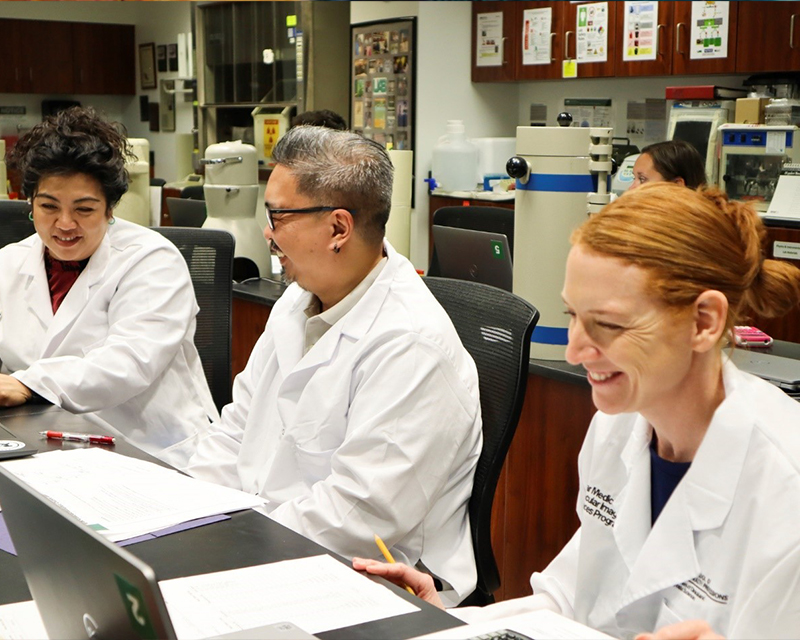 The UAB Health Physics Program - which offers a Master of Science and a Doctor of Philosophy - is the only one:
- in Alabama
- in any of the 16 Southern Regional Education Board states
- within a 550-mile radius
At UAB, our Health Physics students are mentored on an individual basis to help you achieve your career goals. Our students get access to well-known faculty, industry experts, and a variety of unique lab and facility experiences.
Health Physics requires cross-disciplinary critical thinking and is in high demand both in the United States and globally. Our supervised practicums provide students with opportunities for gaining applied real-world work experience and networking connections with professionals in the field.
Regardless of your ultimate career goals, choose excellence. Choose UAB.
Why UAB M.S. in Health Physics?
- The MS in Health Physics program is designed with flexibility in mind. Students can opt for in-person, virtual or hybrid learning experiences.
- All students complete a supervised practice rotation, where they conduct research or learn hands-on health physics skills in a real environment.
- UAB’s Health Physics Faculty are leaders in the field and have unparalleled industry and government contacts.
- UAB’s MHP 654 Laser Safety course meets CLSO eligibility requirements per the Board of Laser Safety. Visit the BLS site for more information.
Why UAB Ph.D. in Health Physics?
As Health Physics technologies expand, the field needs more than practitioners; it needs researchers and leaders who can answer the hard questions and train the next generation. The Ph.D. in Health Physics is built for exactly that: a rigorous, research-focused doctorate that grows out of our well-established MS program and prepares you to advance the discipline.
You'll begin with advanced coursework in dosimetry, environmental health physics, and radiation policy, then move into research methods and seminars that sharpen how you design and communicate independent work. From there, you'll partner with a faculty mentor to pursue original dissertation research, drawing on UAB's Cyclotron Facility, Office of Radiation Safety, and Department of Radiology, along with a national network of industry and government collaborators that expands regularly.
Working in areas from radiation risk assessment and radiobiology to novel radiopharmaceuticals and the radiological challenges of advanced nuclear fission and fusion, you'll produce research that meaningfully advances the field, and graduate ready to lead as faculty, senior scientists, and radiation safety leaders in academia, government, healthcare, and industry.
Contact Us
If you have questions about the Health Physics program, please