Heersink, UAB, and the UAB Health System celebrated the completion of exciting new facilities and facility upgrades in 2025, while ongoing construction projects continued to take shape. These enhancements to our campus promise to serve as essential building blocks for our school’s future excellence in patient care, biomedical research, and medical education.
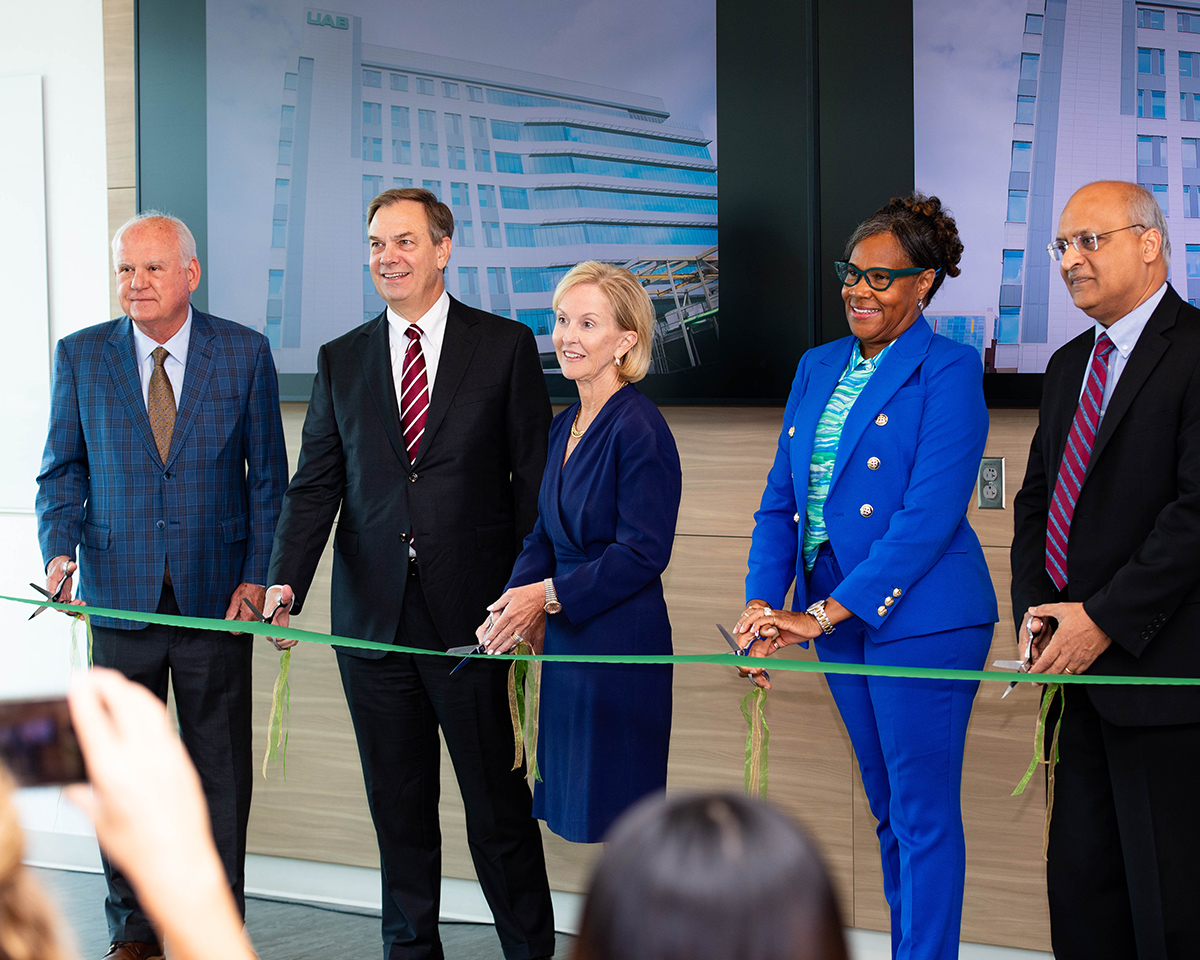
A ribbon-cutting for the Altec/Styslinger Genomic Medicine and Data Sciences Building (ALGEN) on October 23, 2025, represented the culmination of years of planning and construction, as well as a successful public/private funding partnership that included investments from the state of Alabama, Jefferson County, the City of Birmingham, and donors such as the Altec/Styslinger Foundation and Marnix and Mary Heersink.
The building features an iconic double-helix design, prominently displayed through its six-story, glass curtain wall, that reflects the code of life and UAB’s commitment to bridging biology and medicine—from bench to bedside—while embracing the future of AI-driven, personalized care and data-powered innovation.
The ALGEN opening also marks a new era in collaborative leadership, research, and training. The building houses the offices of senior leaders from the Heersink School of Medicine, the UAB Health System, and the University of Alabama Health Services Foundation physician practice plan, promoting greater alignment among UAB Medicine’s joint leadership team. It also brings together the Marnix E. Heersink Institute for Biomedical Innovation, Mary Heersink Institute for Global Health, Hugh Kaul Precision Medicine Institute, UAB Department of Biomedical Informatics and Data Science, and Center for Clinical and Translational Science, among other units, to accelerate the development of innovative solutions to persistent problems in medicine and healthcare.
Seven years of interior and exterior renovations to the McCallum Basic Health Sciences Building wrapped up with a ribbon-cutting on July 9, 2025. Since its original construction in 1983, McCallum has been one of UAB’s most active laboratory research hubs. The newly revitalized building includes a redesigned lobby with a living green wall and state-of-the-art, open-plan wet labs.
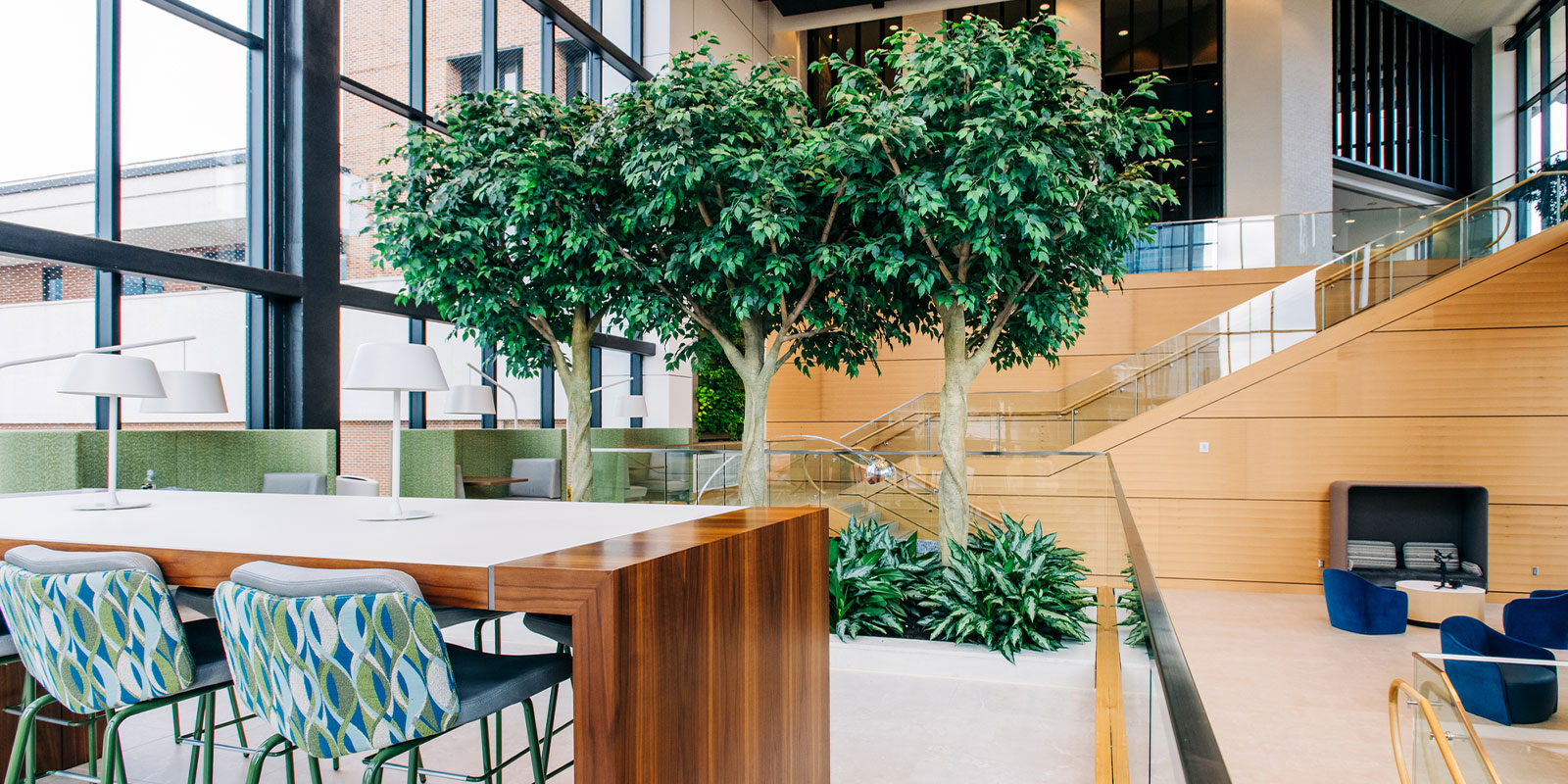
A November 5, 2025, opening reception for the new Volker Hall Atrium brought together school leaders, medical students, alumni, donors, and other supporters. Made possible in part by a gift from the Heersink Family Foundation, the atrium is characterized by sleek, modern architecture and floor-to-ceiling windows that allow in expansive natural light, while the interior includes various seating areas for relaxation and study, a 24-foot-tall living plant wall, and the Morning Grounds coffee bar. The atrium is the first street-level Volker Hall entrance from University Boulevard in recent history.
Construction continued on UAB’s $190 million Biomedical Research and Psychology Building. The eight-story, 228,735-square-foot facility will include wet and dry research laboratories and research support spaces that offer the flexibility necessary for investigators from various disciplines. The building will house research-intensive faculty from the Heersink School of Medicine and the UAB College of Arts and Sciences’ Department of Psychology. Construction is expected to be complete in fall 2026.
Our patient care mission saw major advances with the opening of new state-of-the-art facilities and significant progress made to ongoing construction projects.
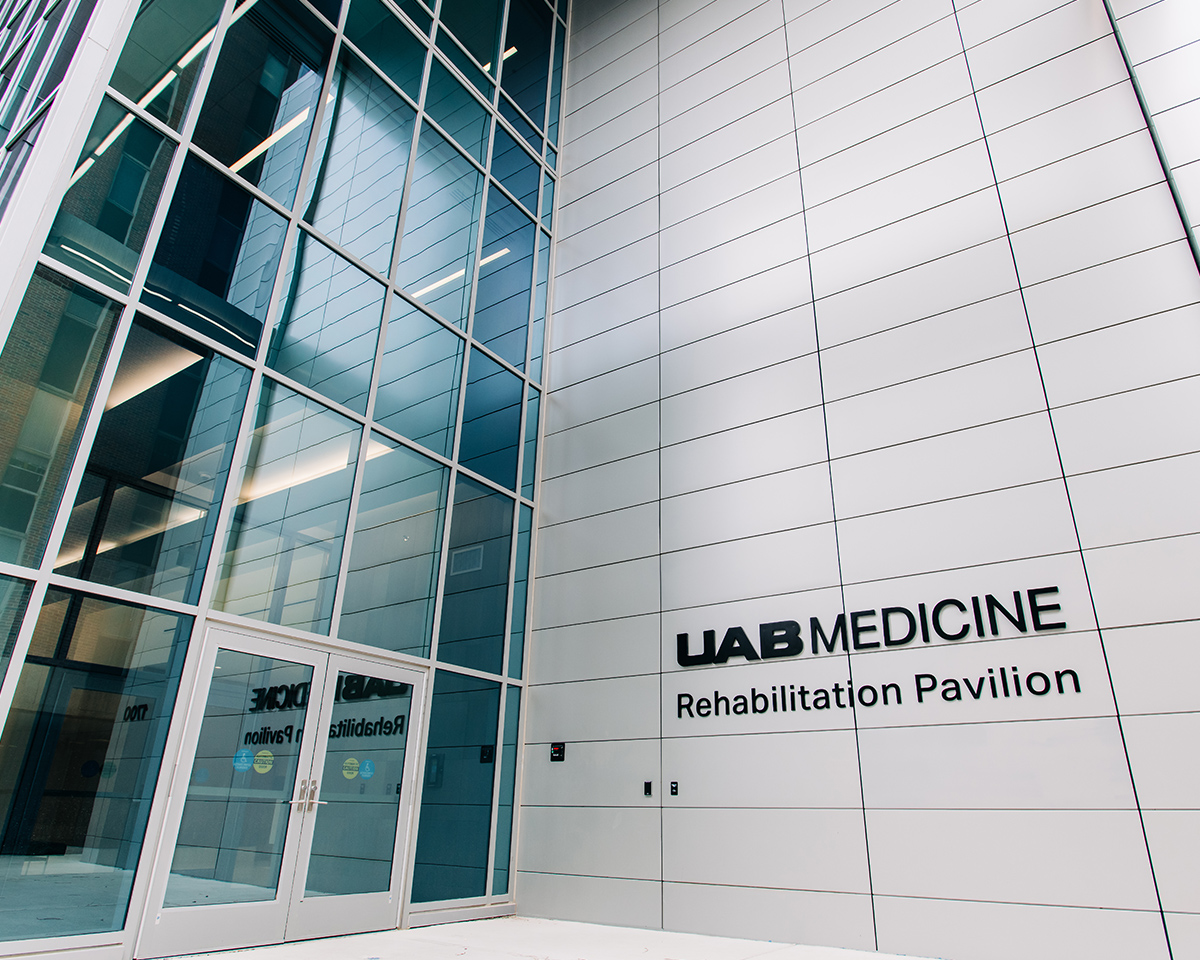
With cutting-edge therapy gyms, advanced rehabilitation technology, and 134 patient beds, the new UAB Rehabilitation Pavilion promises to transform recovery for Alabamians and patients across the region. The emphasis on specialized neurorehabilitation care makes the new facility is a game-changer for patients recovering from life-altering conditions such as stroke, brain injury, spinal cord injury, and other conditions.
In response to unprecedented demand for emergency medical services and to mitigate persistent capacity challenges, UAB Hospital is expanding the University Emergency Department (UED). The $73 million expansion includes renovations to the first floor of UAB Hospital’s North Pavilion that will result in more than 66,000 new square feet of construction, 59 new exam rooms, and additional imaging capacity for emergency clinical care.
Advancing Together
Heersink celebrated alongside some of our key partners as they opened new facilities.
Southern Research, a UAB strategic research affiliate, celebrated the grand opening of a $98 million, state-of-the-art biotechnology center, which doubles the organization’s lab capacity. UAB President Ray Watts, M.D., currently serves as interim CEO of Southern Research.
Cooper Green Mercy Health, an affiliate of the UAB Health System, opened a new ambulatory care facility in December 2024. The five-story, 211,000-square-foot clinic operates under an agreement between Jefferson County and UAB Health System, providing clinical services including primary care, specialty care, ophthalmology, behavioral health, an oncology clinic, and expanded dental care. The Cooper Green Mercy Health Services Authority provides high-quality health care to all residents of Jefferson County, regardless of ability to pay.
The Jefferson County Coroner/Medical Examiner’s Office moved to a new, 32,000-square-foot facility. Gregory Davis, M.D., MSPH, professor and director of the UAB Division of Forensic Pathology, Department of Pathology, serves as Jefferson County coroner and took part in the facility’s ribbon-cutting.
Innovation Meets Conservation
Sustainability has been a watchword throughout the upgrades to our campus facilities.
The McCallum Basic Health Sciences Building’s energy efficiency has significantly improved. Since renovations began, energy intensity has been reduced by 38.5 percent and the building has surpassed $3 million in total energy cost savings.
The new Altec/Styslinger Genomic Medicine and Data Sciences Building is one of the first buildings in Alabama to use bird-safe glass. The building’s exterior incorporates glass etched with small dots placed two inches apart to prevent birds from flying into the glass.
The more than 200 research labs participating in UAB’s Green Labs Program have saved more than $1.4 million in energy reductions and resource savings since the program began in 2017. In 2024, these labs recorded $386,150 in energy reductions and saved $110,000 by redistributing equipment between labs instead of purchasing new equipment during a pilot project testing a campus resource-sharing platform.