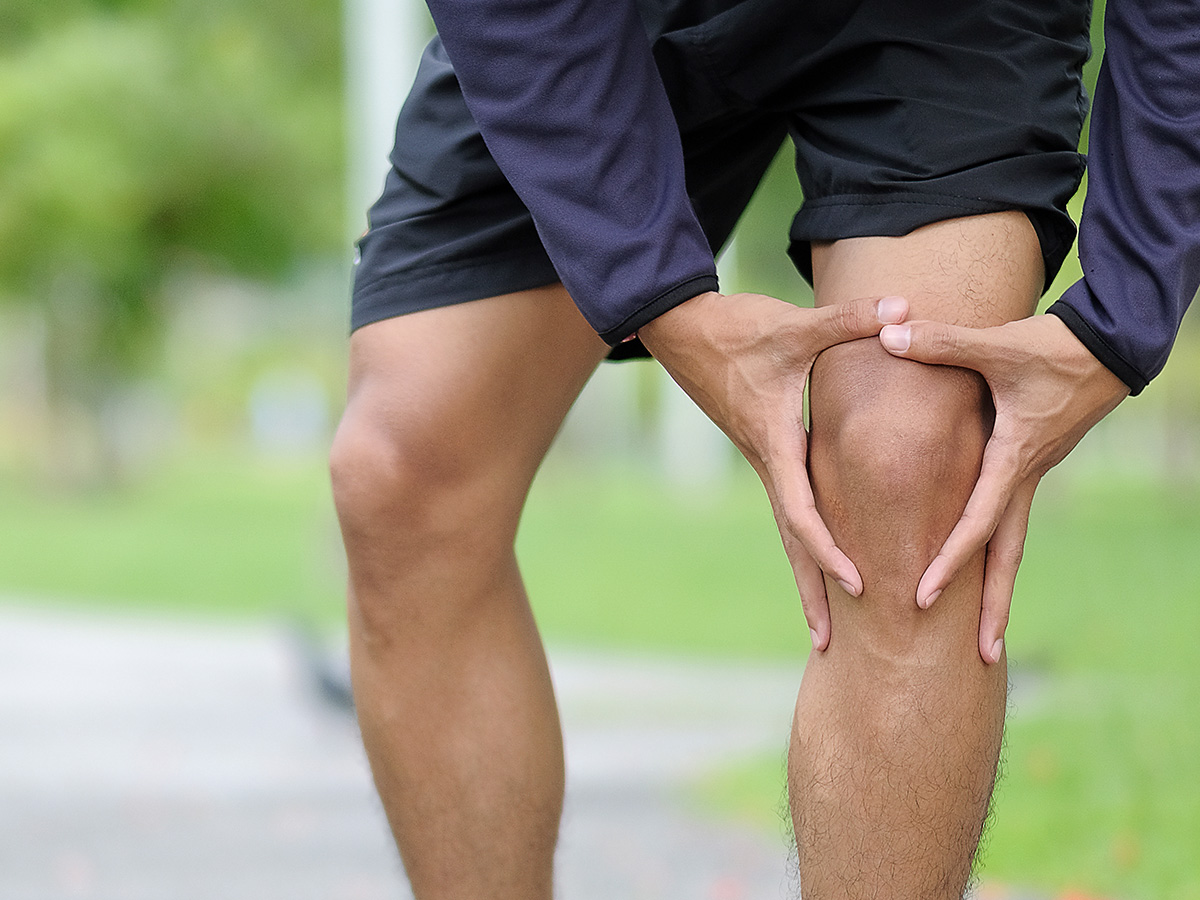
 Momaya says traditional knee pain can be diagnosed as either acute or chronic after an exam is conducted.Pain in the knee and ankle are common experiences of human mobility. Joint and muscle experts from the University of Alabama at Birmingham offer insight into what pain in the knee and ankle may mean and offer methods to take care of these essential parts of the musculoskeletal system.
Is all pain a definitive injury?
The knee and ankle are supporting joints for the weight of the human body. However, injury is not always the reason for pain. Overuse and underuse are also reasons why pain may present during activation of these joints.
“If you have generalized stiffness, and without any recent notable injury, it could simply point to a general lack of flexibility and the need to work on tissue mobility and stretching of the knee,” said Amit Momaya, M.D., chief of UAB Sports and Exercise Medicine, Department of Orthopaedic Surgery.
Dorsiflexion is the range of motion that allows the bending and contracting of the foot upward and downward. This supports the knee and shin’s ability to articulate movement across the plane of the ankle efficiently.
Nelson Santos Agosto, D.O., an Instructor Fellow in the UAB Department of Physical Medicine and Rehabilitation says the knee and ankle work in tandem and the dorsiflexion of the ankle could result in residual pain up and through the knee.
“If we have limited dorsiflexion, that can cause secondary issues with our knee alignment, primarily when physically active,” Santos said. “Foot stability can improve shock absorption, knee alignment, improve balance, and ultimately reduce risk of injury for the knee itself.”
Momaya says traditional knee pain can be diagnosed as either acute or chronic after an exam is conducted.
“This determines the treatment pathway used to heal or correct the issue,” he said.
Acute injuries may come from a specific minor activity from overextension or exertion. For example, lifting weights, boxes, or even daily activity like taking out the trash. Simple accidents that result in the twisting of the knee or ankle are another example. These type injuries may result in pain for a specific period that will steadily decrease over time.
Chronic injuries present as more consistent rigidity, stiffness, or pain. This can be associated with the need to actively stretch the or consistently build up the activity of the knee or ankle.
For those experiencing pain without recollection of a moment of injury, Momaya suggests practicing controlled loading and introducing consistent replicated stress for stretching and strength building purposes.
“Often times people default to thinking rest is what they need, but that is not always the case,” Momaya said. “Pain that is not birthed from a true tear or sprain may simply need to achieve a higher range of mobility and strength.”
Ultimately, moderate degrees of pain cannot be definitively narrowed down to acute or chronic injuries. Consistent exercising and stretching on the lower part of the body can work to increase mobility and strengthen these parts of the body.
Sedentary lifestyles and rapid exposures to stress and strain can also both result in knee and ankle irritants.
Caution for athletes
Athletes present a different strategy for remedying pain from miscellaneous conditions or factors. Previously diagnosed injuries, training schedules and new minor injuries could all result in varying levels of pain and must be considered.
“We have to first analyze, is this residual impact of previous injuries, is the athlete being overworked schedule wise, or could there be underlying issues with the meniscus or cartilage,” Momaya said. “Deficits with muscular balance, strengthening and flexibility can also be culprits.”
 Dorsiflexion is the range of motion that allows the bending and contracting of the foot upward and downward.Momaya suggests athletes visit their physicians to quickly diagnose pain and target treatment options. Recovery may be needed from overexertion, but in athletes, continued activation of an inflamed knee or ankle can lead to serious injury.
For example, soccer players who frequently stress the ankle, especially when running or kicking, should watch for ankle pain. Continued use of a strained muscle or sprained ligament can lead to long-term injury.
Proprioception is the ability and awareness of how the body, joints, and extremities move through space.
Santos says in athletes, a decreased proprioception due to prior injuries or comorbidities can increase the potential for injury.
“Correcting that neuromuscular control associated with this can help with ankle stability and thus decrease correlated pain,” Santos said.
Minimizing risk and increasing mobility
Weight management is a major factor in the stress placed on the ankle and knee. A healthy and active lifestyle can relatively promote strength in these joints.
“Eating healthy and maintaining a generally healthy lifestyle is the most common way to proactively prioritize wellness in this area,” Santos said. “Increasing proteins, healthy fats and avoiding fried foods are a simple way to start.”
Santos says decreasing the amount of processed carbohydrates is also important.
“The amount of weight that we carry across our joints, can result in a significant amount of stress and load upon our joints, Santos said. “It is important to be mindful of how much weight we are distributing across these joints because muscle mass translates to a different load on the joints.”
Foods that work to decrease inflammation can also be influential in a diet to target knee and ankle pain. Baked fish, nuts, berries, and leafy greens for salads are great additions.
Momaya says checking vitamin levels can present a snapshot of strategies to minimize risk of injure and strengthen the supporting muscles and bones.
“Taking a medically approved multivitamin or even a supplement with vitamin D can be a great first step,” Momaya said. “For those looking to build muscle, the body needs around one gram of protein per pound of body weight, and this is not easy or common for someone who is not intentional with the foods they eat.”