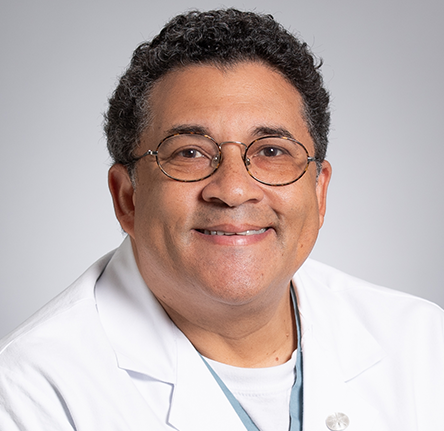
 Carlton Young, M.D., assistant dean for Access and Engagement – Medical Student Experience and Professor of Surgery, will retire from Heersink School of Medicine, effective Dec. 31, 2025, after 28 years of service in student support and mentorship for the institution. He will continue his clinical practice and will remain a crucial part of UAB Medicine.
Prior to joining UAB, he served as assistant professor of surgery for the University of Arizona Medical Center and Kino Community Hospital in Tuscon, Arizona for several years. His career with UAB began in 1997 when he served as assistant professor of surgery and director of pancreas transplantation in our Department of Surgery. Since that time, he has earned a number of roles and distinctions. He became associate professor of surgery in 2003 and full professor of surgery in 2010. He began serving as director of pediatric renal transplantation for Children’s of Alabama in 2011. In 2012, he was named assistant dean for Medical Student Diversity and Inclusion. In recent years, he has taken on the roles of director of VA renal transplantation in 2021 and co-director of UAB Medicine Comprehensive Transplant Institute in 2024.
“Dr. Young’s impact in the area of mentorship has really meant a lot to our students and our school as a whole,” said Craig Hoesley, M.D., senior associate dean for Medical Education. “Carlton has forged opportunities for so many people. Whether through physician training, building individual relationships with students, or through impactful summer programs, he’s always tried to help others achieve their dreams and better their situations. He’s a fantastic physician, surgeon, and mentor who has left his mark on this school.”
Part of Dr. Young’s legacy in Heersink School of Medicine was his work with the Summer Health Professions Enrichment Program (SHPEP). “The students absolutely loved him,” said Carlyn Maddox, administrative associate in the Department of Medicine who worked with Dr. Young for six years. “Not only did he connect with the medical students who were working during SHPEP, but he connected with the undergraduate students who attended. Eighty undergraduate students would attend every year, and he would invest six weeks out of his summer to their mentorship.”
Erica Brown, Ph.D., program manager for the Office of Access and Engagement – Medical Student Experience, shared how his mentorship through SHPEP left a lasting impact. “I saw countless mentoring moments that never make it into job descriptions. He opened doors for students who were just beginning to imagine a future in medicine, and he gave them not only knowledge, but confidence. Many of them still talk about the impression he made and how meaningful it was to learn from him.”
Brown also noted the impact Young has made on the Office of Access and Engagement as a whole. “He helped shape our office into a place where students felt seen, supported, and empowered. He understood that diversity was not just a goal, but a strength, something that enriches the entire institution and pushes us forward. Watching how students have flourished under his guidance has been one of the clearest reflections of his presence: he lifts others up, quietly and consistently, and does it with genuine care.”
“I had the privilege of working with Dr. Young from 2017-2023,” said Jenna Blythe-Tjia, M.Ed., director of Operations for the Applied Evaluation and Assessment Collaborative in the UAB School of Public Health. “In my time under his leadership, I learned so much about the needs of diverse student populations and how to really create an inclusive environment for Heersink School of Medicine. It has been an honor to see firsthand how his presence would bring out the best in students. He was dynamic and charismatic, which students truly needed to see. They heard his words of wisdom and were reminded they deserve to be at Heersink School of Medicine. He never deterred from this message.”
In addition to his instrumental work bringing SHPEP to Heersink School of Medicine, he provided community support throughout his career in the institution, reinforcing his mission to help those around him achieve better health. He has served on an admissions panel for Young Physicians Initiative, highlighting the importance of educating youth in medical training. Reaching directly into communities, he gave numerous radio and television interviews representing the Alabama Organ Center to share the importance of organ donation, and he visited dozens of local schools to discuss transplantation and medicine.
Dr. Young’s passion for our community, his colleagues, and his students been evident throughout his career. Through a legacy of mentorship and blazing trails for those who come after him, his impact will be felt for many years to come.